
Citric Acid Anhydrous (E330) CAS: 77-92-9
Citric Acid Anhydrous (E330) CAS: 77-92-9

Debate over the EPA's updated diesel emissions proposal continues as industry groups argue that the framework does not fully address the needs of small-truck operators and agriculture-dependent businesses. Procurement professionals should understand how regulatory changes could affect fertilizer logistics and transportation costs.

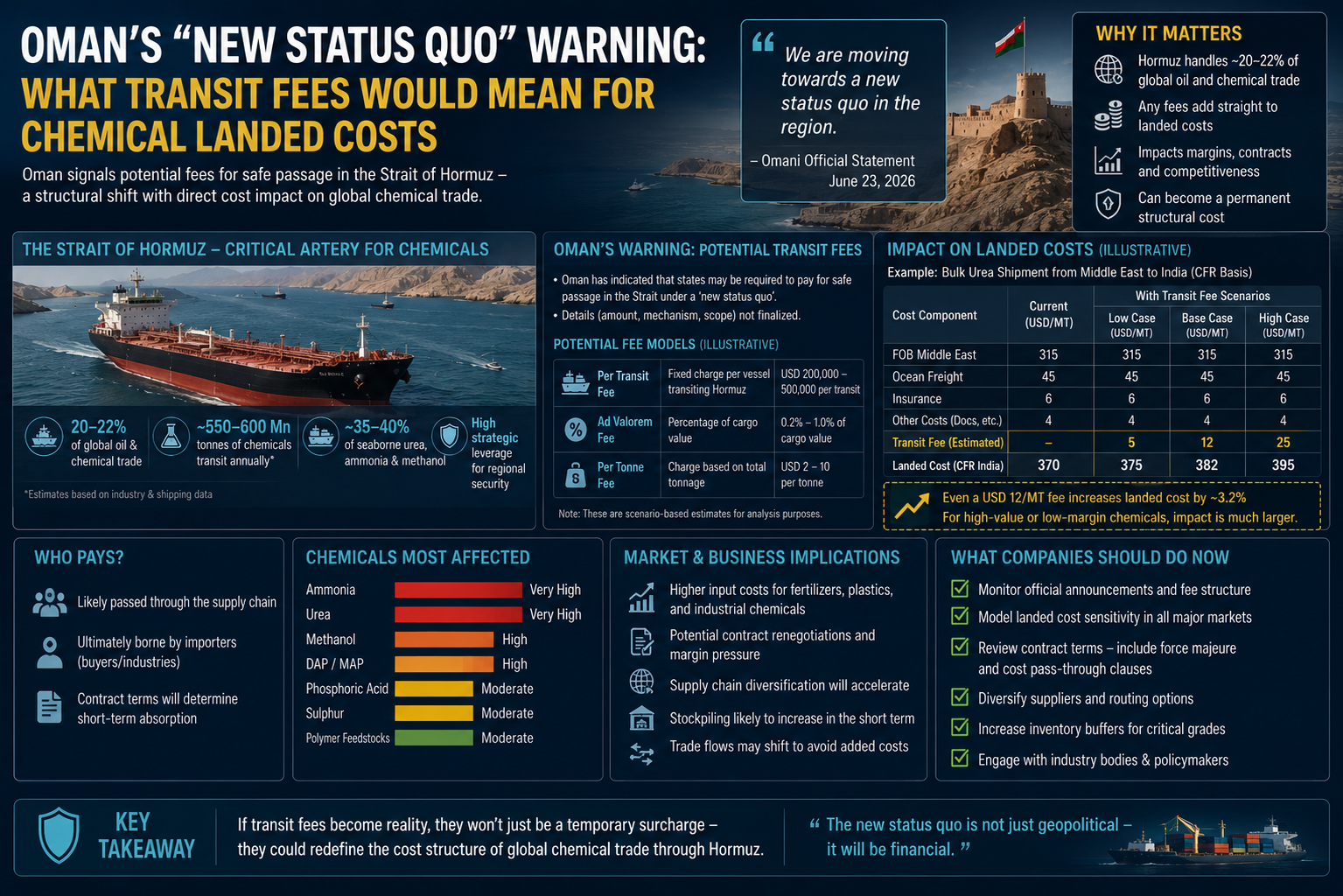
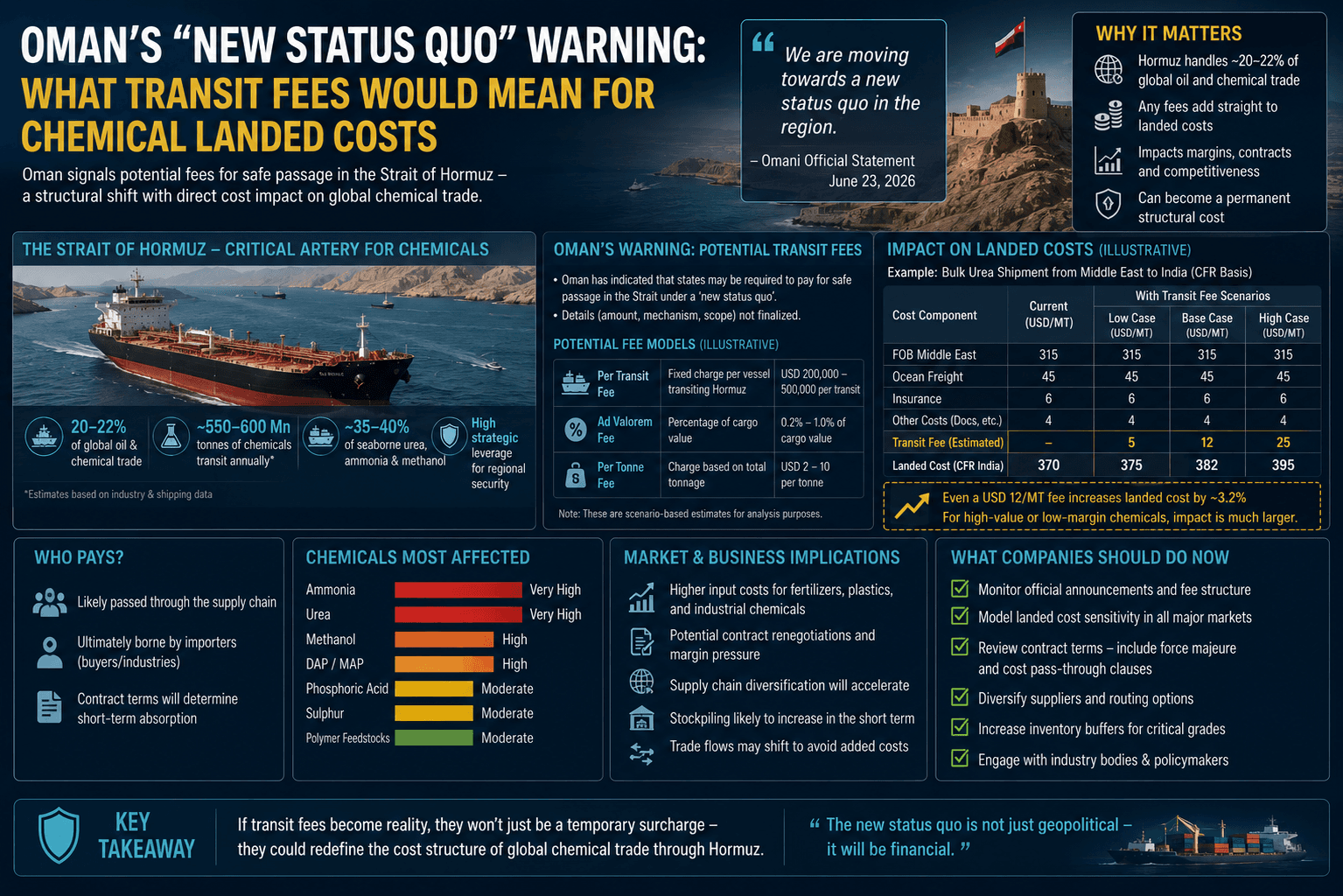
Iran’s proposal to charge “service fees” for Hormuz passage could permanently reshape the economics of global chemical trade. If transit charges become permanent, Gulf-origin chemical supply chains may face $500 million to $1.5 billion in additional annual costs that buyers will ultimately absorb through higher contract pricing.

The world's nine largest container shipping lines continue maintaining Cape of Good Hope routing as their operational standard entering H2 2026. For chemical buyers shipping under CIF and CFR contracts, understanding each carrier's operating posture is now a critical component of logistics and insurance planning.

H1 2026 reshaped global chemical trade as the Hormuz crisis disrupted supply routes, cut seaborne volumes by up to 20%, boosted Chinese and US exports, and permanently altered logistics patterns. H2 will determine which of these structural shifts become the new normal.

Planning food ingredient procurement for H2 2026 unlocks key sourcing advantages while mitigating risks. By mapping opportunities for citric acid, sucralose, maltodextrin, dextrose, guar gum, and corn starch, buyers can make smarter, data‑driven purchasing decisions.

Agrochemical logistics are improving after the Hormuz disruption, but commercial shipping remains far below normal capacity. Importers should maintain conservative Q3 shipping plans, rely on Cape routing, and prepare for only partial Hormuz recovery by September.
We're committed to your privacy. Tradeasia uses the information you provide to us to contact you about our relevant content, products, and services. For more information, check out our privacy policy.