Explore our network of country and industry based websites to access localized information, product offerings, and business services across our group.
Log in to start sending quotation requests for any product.
Don't have an account? Sign Up Here
Log in now to access technical product documents from our product range.
Don't have an account? Sign Up Here
Home All Products Konjac Gum
|
IUPAC Name |
: (1S,2R,3R,4S,5S,6R)-2-[(2R,3R,4R,5R,6R)-3,4,5-Trihydroxy-6-(hydroxymethyl)oxan-2-yl]oxy-3,4,5,6-tetrahydroxycyclohexyl 2-O-(beta-D-glucopyranosyl)-beta-D-mannopyranoside |
|
Cas Number |
: 37220-17-0 |
|
HS Code |
: 1302.39.90 |
|
Formula |
: C26H43O22 |
|
Appearance Name |
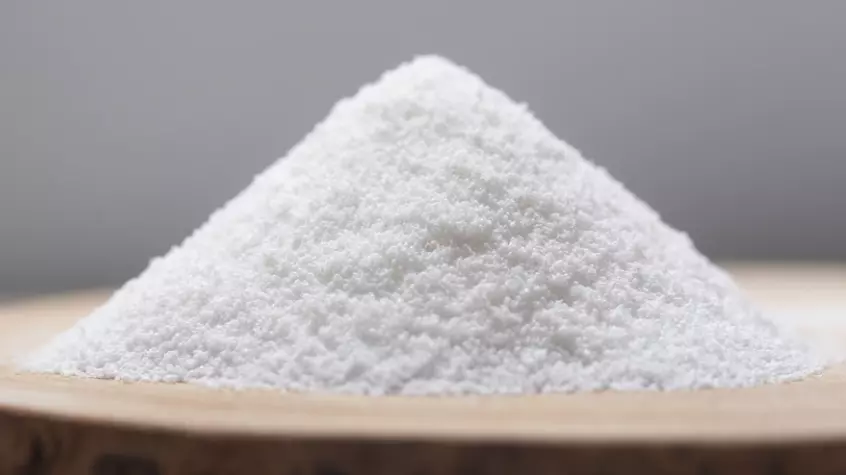
: White or Cream-Coloured Powder |
|
Common Names |
: Konjac Flour, E425 |
|
Packaging |
: 25 kg Kraft Paper Bag/ Fibre Drum |
For more detailed information including pricing, customization, and shipping:
Brief Overview
Konjac gum is extracted from the root of the Konjac plant, a part of Genus Amorphophallus. It is white or cream-colored with high viscosity. It has high transparency in nature and can be easily dissolved. Konjac Gum comprises 85-90% Glucomamman and is used in Asia to create flour and a high-viscosity jelly. It synergizes with kappa carrageenan and xanthan gum, forming thermoreversible, elastic gels. Konjac Gum has many characteristics such as hydrophilic, thickening properties, stability, emulsification, suspension, gel and film forming properties, etc.
Manufacturing Process
The process of crude konjac glucomannan production consists mainly of two steps: drying by dehydration and konjac power processing. The freshly harvested konjac tuber is first washed, peeled, then sliced. The konjac slices are then dried by dehydration in oven-drying equipment. The dried slices are broken and grind into a fine powder. The starch, fiber, and other impurities are then removed. When the konjac powder is further purified and finely subdivided, a better product, konjac gum, will result, which is better quality and more convenient for use.
Food Industry
Konjac Gum stabilizes ice cream as it makes the taste smooth and delicate. Konjac Gum is used as a binder in noodles, rice noodles, twisted leather, meatballs, sausage, bread, and pastries to enhance tendon force, keep a fresh state, and increase the intensity of the lines and surfaces to increase the toughness of noodles. It is used as a gelling agent for various kinds of fudge, obstinacy, and crystal sugar and to produce bionic food. It is recommended as a thickening and gelling agent for a wide variety of food, including as a vegan substitute for gelatin. It is also an additive in biscuits, cakes, and other baked food, giving the products a smooth appearance and loose texture.
Healthcare Industry
Konjac Gum is used for reducing glycemia, blood cholesterol, and blood pressure. It is used to increase insulin sensitivity.
Chemical Industry
Konjac Gum is used in petroleum, textile and dye printing due to its high viscidity, good fluidity and high molecular weight.



 English

 Indonesian
 简体字
简体字
 العربية
 Español
 Français
 Português
 日本語
日本語
 한국어
한국어
 Tiếng Việt




















---india.webp)