Introduction
Blood meal is one of the most concentrated protein ingredients used in modern animal nutrition and organic fertilization, with crude protein levels commonly ranging from 80% to 90%. In the United States, it is used extensively in poultry, swine, aquaculture, and pet food formulations, as well as in organic farming as a nitrogen-rich fertilizer. Yet, despite its high value, blood meal is also one of the most sensitive proteins when it comes to logistics. Among the many variables that affect its performance, transit time from production site to end user is especially critical.
Unlike some more stable plant-based proteins such as soybean meal, blood meal is derived from fresh animal blood and must be processed, dried, stored, and transported under tightly controlled conditions. Any delay or mishandling along the supply chain can compromise protein quality, digestibility, color, odor, and even safety. For US buyers who rely on imported or domestically shipped blood meal, understanding why transit time matters can directly influence feed efficiency, animal performance, and regulatory compliance.
This article explains the science and economics behind blood meal’s sensitivity to transit time, explores the specific requirements of the US market, and shows how working with a structured supply platform such as chemtradeasia.com can help mitigate risks. By the end, nutritionists, feed formulators, purchasing managers, and organic fertilizer distributors will have a clearer picture of how to manage transit time as a strategic variable rather than an afterthought.
Understanding Blood Meal as a Specialized Protein Source
Blood meal is produced by collecting fresh blood from slaughterhouses, coagulating or separating it, and then drying it using drum, spray, or ring dryers. The resulting product typically contains 80–90% crude protein, 5–8% moisture, and small amounts of fat and ash. Its amino acid profile is rich in lysine and leucine, making it a valuable supplement in monogastric diets when used correctly at controlled inclusion levels. Because of its high nitrogen content, often above 12% on a fertilizer label, blood meal is also prized as a fast-acting organic nitrogen source for crops and lawns.
However, blood meal is not a generic commodity. Its functional properties vary widely depending on the raw material, processing technology, drying temperature, and post-processing handling. Overheating can reduce digestibility by causing Maillard reactions, while under-drying or poor storage can lead to microbial growth, clumping, and off-odors. These characteristics mean that blood meal behaves differently from other proteins such as fish meal, soybean meal, or corn gluten meal, especially when subjected to long or unpredictable shipping times.
In the US, demand for high-quality animal proteins is driven by large poultry and swine industries, an expanding aquaculture sector, and a growing premium pet food market. At the same time, organic farming has been growing steadily; according to USDA data, certified organic farmland and sales have both increased over the past decade, supporting consistent demand for organic nitrogen fertilizers like blood meal. This dual feed-and-fertilizer role amplifies the importance of maintaining quality across the entire supply chain, where transit time plays a central role.
Why Transit Time Is Critical for Blood Meal Quality
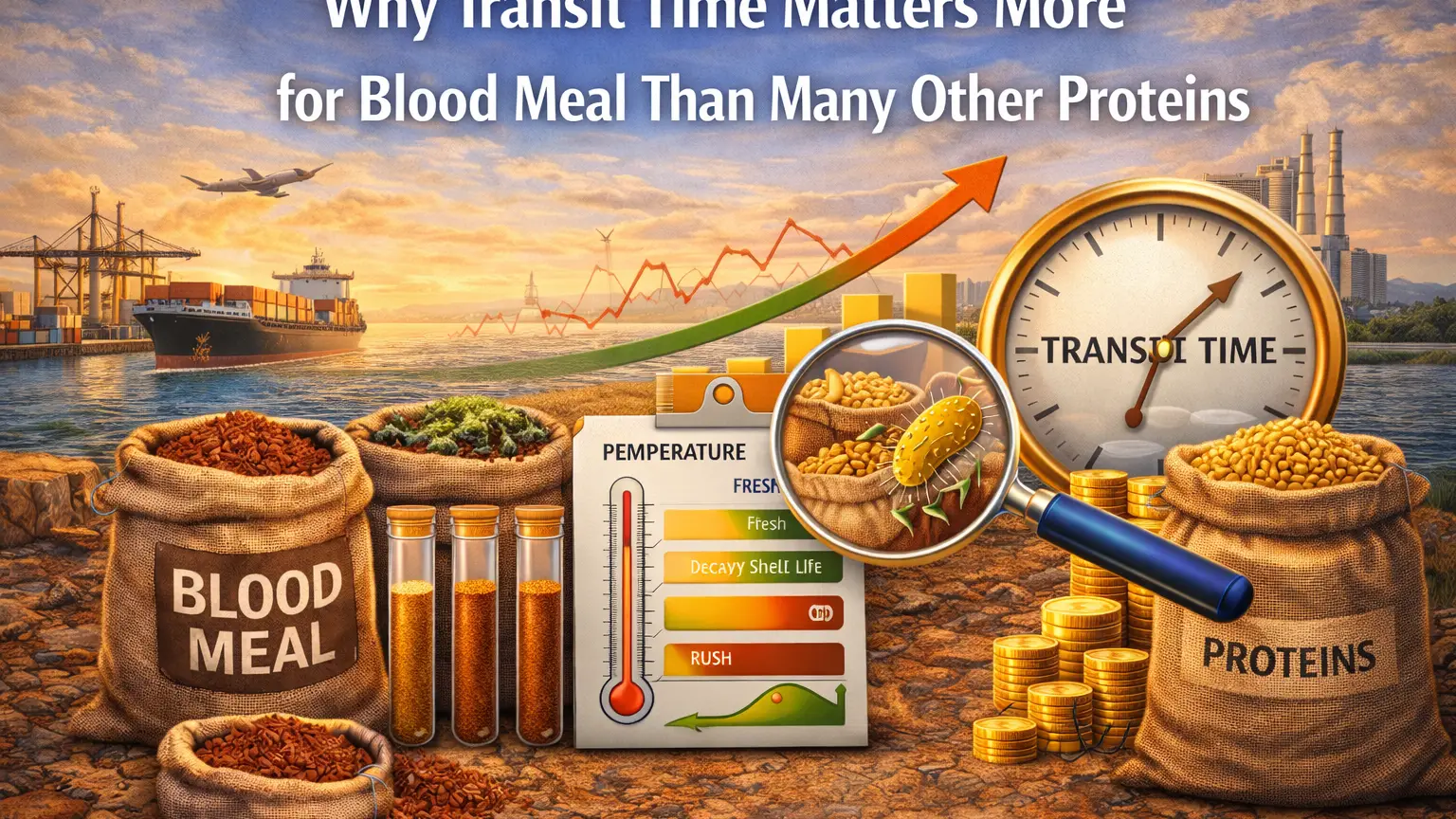
Transit time matters for all perishable and semi-perishable goods, but blood meal is especially sensitive due to its origin and composition. Even though it is dried, it still contains residual moisture and a high level of reactive proteins. When shipments are delayed, stored under fluctuating temperatures, or exposed to humidity, the risk of quality degradation increases significantly. Extended transit can lead to increased moisture uptake, caking, darker color development, and intensified odor, all of which can signal underlying chemical or microbiological changes.
From a nutritional standpoint, prolonged or poorly controlled transit can negatively affect digestibility. If blood meal is exposed to high temperatures for extended periods, for example in unventilated containers during summer, proteins can undergo additional heat damage beyond the original drying stage. This can reduce the availability of key amino acids such as lysine, undermining the value of the ingredient in high-performance diets. In contrast, some more robust ingredients like soybean meal tend to be less sensitive to these incremental changes during shipping, making transit time less critical for them than for blood meal.
Transit time also interacts with inventory management. US feed mills and fertilizer blenders often operate on tight schedules, matching incoming raw materials with production plans. When blood meal shipments arrive late, buyers may be forced to use older inventory, extend storage beyond optimal periods, or rapidly adjust formulations. These actions increase the likelihood of using product that has already passed its ideal storage window, compounding the negative effects of long transit. For imported blood meal moving by sea, where transit may range from 25 to 50 days depending on origin, every additional week in transit can meaningfully affect perceived freshness and performance.
Quality, Safety, and Regulatory Considerations in the United States
In the US, blood meal used in animal feed is subject to oversight by the Food and Drug Administration (FDA) and state feed control officials, while blood meal used as fertilizer must comply with state-level fertilizer regulations and, when marketed as organic, meet National Organic Program (NOP) standards. These frameworks do not just focus on label guarantees; they also emphasize safety, traceability, and adherence to good manufacturing practices. Transit time directly influences the ability to maintain these standards, particularly in relation to microbiological stability and contamination control.
Although properly processed blood meal is considered shelf-stable, extended transit under poor conditions can increase the risk of mold growth or contamination with pathogens if moisture levels rise. This is particularly relevant when containers are exposed to condensation cycles, or when product is repacked or transshipped multiple times. For feed applications, elevated microbial counts or mycotoxin risks can trigger rejection of lots, recalls, or regulatory scrutiny. For fertilizer applications, quality problems may appear as clumping, strong off-odors, or uneven nutrient release, which can harm brand reputation and customer satisfaction.
US buyers also face increasing pressure to document supply chain integrity. Audits by large integrators, pet food companies, and organic certification bodies often require evidence of controlled handling from origin to destination. Long, opaque transit chains make this documentation more complex. When blood meal is sourced through clear, trackable channels with defined lead times, it becomes easier to demonstrate compliance with Hazard Analysis and Critical Control Points (HACCP) plans, feed safety programs, and organic certification requirements. Managing and shortening transit time, where possible, is therefore both a quality and compliance strategy.
Benefits of Sourcing Blood Meal via chemtradeasia.com
Because of blood meal’s sensitivity to transit time, choosing the right sourcing partner is as important as selecting the right specification. The platform chemtradeasia.com connects US buyers with vetted manufacturers of blood meal and other feed and fertilizer ingredients, helping to optimize not only price and quality but also logistics performance. By consolidating demand and working with multiple origin points, the platform can offer options that align with desired lead times and shipping routes, reducing the risk of excessive transit duration.
One of the key benefits of sourcing through chemtradeasia.com is access to standardized product specifications and documentation. Typical blood meal offerings include clear data on crude protein (often 80–90%), moisture (usually below 10%), ash, fat, and microbiological parameters. Certificates of analysis, origin, and compliance can be provided to match US feed or fertilizer regulations. This level of transparency enables buyers to set quality thresholds and link them to logistics requirements, such as maximum acceptable transit time or preferred ports of loading and discharge.
From a logistics perspective, chemtradeasia.com supports shipment planning, container consolidation, and route selection to minimize unnecessary delays. For example, a US poultry integrator on the East Coast might prefer shipments routed through ports with shorter sea transit from Asia or Latin America, while a fertilizer distributor in the Midwest may prioritize stable year-round schedules to align with planting seasons. By coordinating these preferences and providing realistic transit estimates, the platform helps buyers manage inventory, avoid over-aging stock, and maintain consistent product performance. In a market where margins are tight and animal performance metrics are closely tracked, these logistics advantages can be as valuable as a small price discount.
Conclusion
Blood meal’s exceptional protein concentration and nitrogen content make it a strategic ingredient in US animal feed and organic fertilizer markets, but these same characteristics also make it more sensitive to handling and transit conditions than many other proteins. Transit time is not just a logistical detail; it is a critical determinant of nutritional value, physical quality, safety, and regulatory compliance. Extended or poorly managed transit can lead to reduced digestibility, off-odors, caking, and increased risk of microbiological issues, all of which diminish the value of the product to feed mills, farmers, and fertilizer users.
For US buyers who depend on predictable performance and consistent supply, managing transit time requires a combination of technical understanding and strategic sourcing. This includes selecting appropriate product specifications, setting clear quality standards, and partnering with suppliers and platforms that can offer transparent, reliable logistics. Compared with more stable ingredients such as soybean meal, blood meal simply leaves less room for error along the supply chain, especially when moving across long international routes.
By working with structured supply channels like chemtradeasia.com, buyers gain access to vetted blood meal producers, standardized quality documentation, and optimized shipping routes designed to control transit time. This approach helps protect the integrity of the protein, improve feed efficiency and crop performance, and reduce the risk of regulatory or quality issues. In an environment where every percentage point of performance matters, viewing transit time as a critical quality parameter for blood meal is not optional—it is essential for long-term success in the US market.
Leave a Comment