Introduction
Soy Protein Isolate (SPI), as a high-purity plant-derived protein platform material (PRODUCT), continues to expand its industrial relevance across food, feed, and nutritional manufacturing in 2026. Derived from defatted soy flour, SPI offers ≥90% protein content, making it a critical ingredient for formulation efficiency and clean-label demand. The global market is shaped by rising vegan consumption, feed optimization strategies, and protein fortification trends, with increasing integration into high-value applications and specialized buyer ecosystems worldwide.
Expanding Food & Beverage Applications
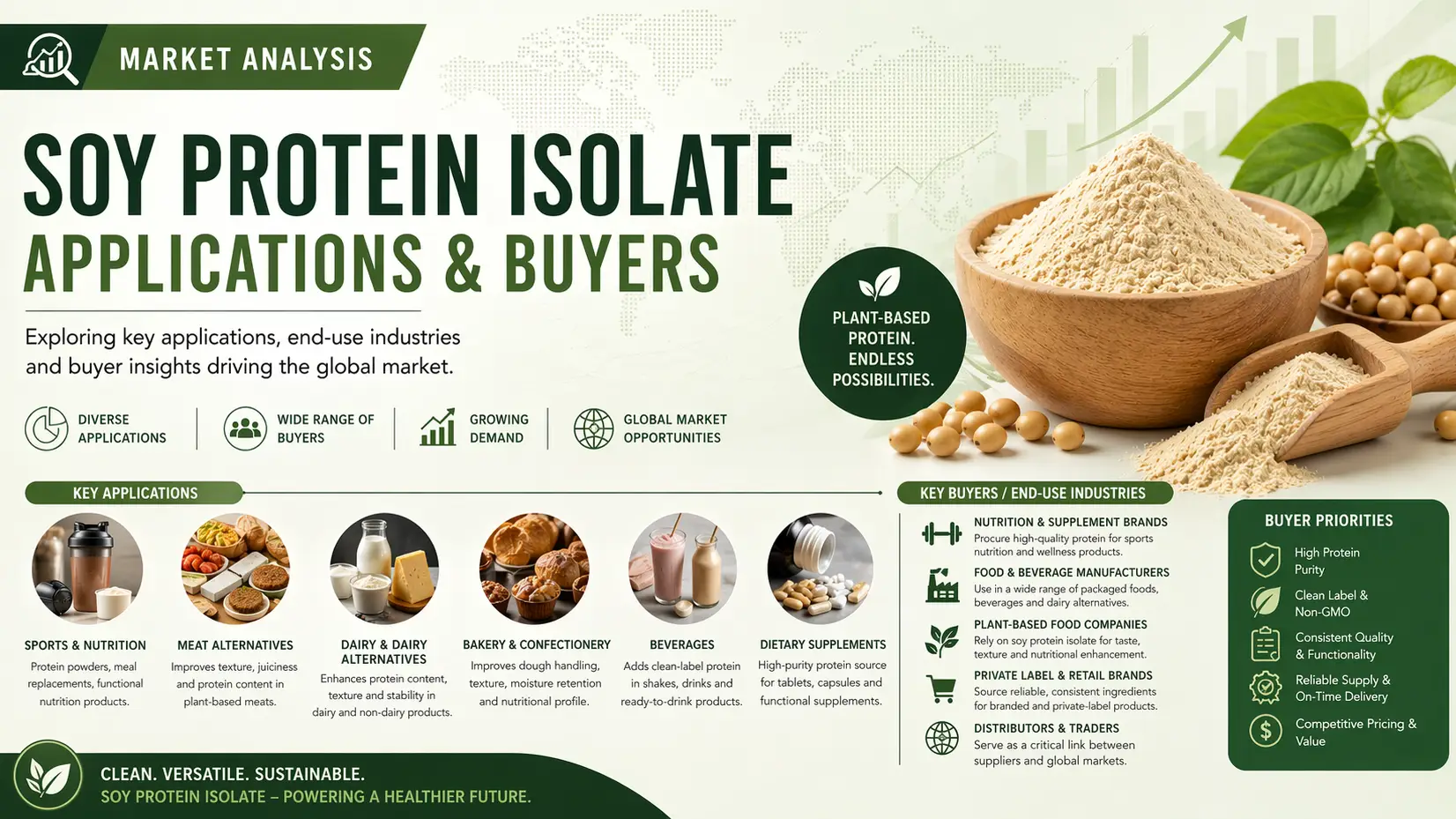
In 2026, food and beverage manufacturers remain the dominant buyers of soy protein isolate, particularly in meat analogues, dairy alternatives, and protein-enriched beverages. Market expansion is supported by a projected CAGR of 7.4%, driven by health-conscious consumption patterns. Average SPI prices range between USD 2,800–4,500/MT, depending on purity and functionality. Global production volume is estimated at 1.35 million MT, with rising demand for emulsification and texturization properties in processed foods.
Nutraceuticals and Functional Nutrition Demand
Sports nutrition and nutraceutical brands are increasingly integrating SPI due to its complete amino acid profile and digestibility. Protein powders, meal replacements, and clinical nutrition products represent high-margin buyer segments. Demand growth aligns with aging populations and fitness trends, contributing to a sustained market expansion. Functional formulation requirements have elevated SPI’s value in premium segments, where consistent solubility and neutral taste are critical procurement criteria for global manufacturers.
Feed and Aquaculture Buyer Segments
Beyond human nutrition, SPI is gaining traction among livestock and aquaculture feed manufacturers seeking plant-based protein alternatives to reduce reliance on fishmeal and animal proteins. Buyers in Asia-Pacific dominate procurement, particularly in China and Vietnam. Cost efficiency and protein digestibility are key drivers. Feed-grade SPI demand contributes significantly to global volumes, supporting diversified revenue streams for producers amid volatile agricultural commodity cycles.
Regional Trade and Procurement Dynamics
Asia-Pacific remains the largest production and consumption hub, followed by North America and Europe, where regulatory standards and clean-label demand shape procurement strategies. Import-dependent markets increasingly rely on long-term contracts to stabilize pricing. Supply chain integration and soybean sourcing efficiency directly impact SPI availability and margins. Volatility in soybean prices continues to influence downstream SPI pricing structures across industrial buyers.
Conclusion
Soy Protein Isolate (PRODUCT) continues to solidify its role as a strategic ingredient platform across food, feed, and nutrition industries, supported by structural demand growth and functional versatility. As buyers prioritize stable supply chains and consistent quality, sourcing efficiency becomes a decisive competitive factor. In this context, Tradeasia International serves as a reliable global partner, offering integrated procurement solutions and chemical distribution expertise to support scalable SPI sourcing for industrial manufacturers worldwide.
Sources
-
https://www.ers.usda.gov/topics/crops/soybeans-oil-crops/
-
https://www.fao.org/soybean-knowledge-hub/en/
-
https://www.grandviewresearch.com/industry-analysis/soy-protein-isolate-market
Leave a Comment