Introduction
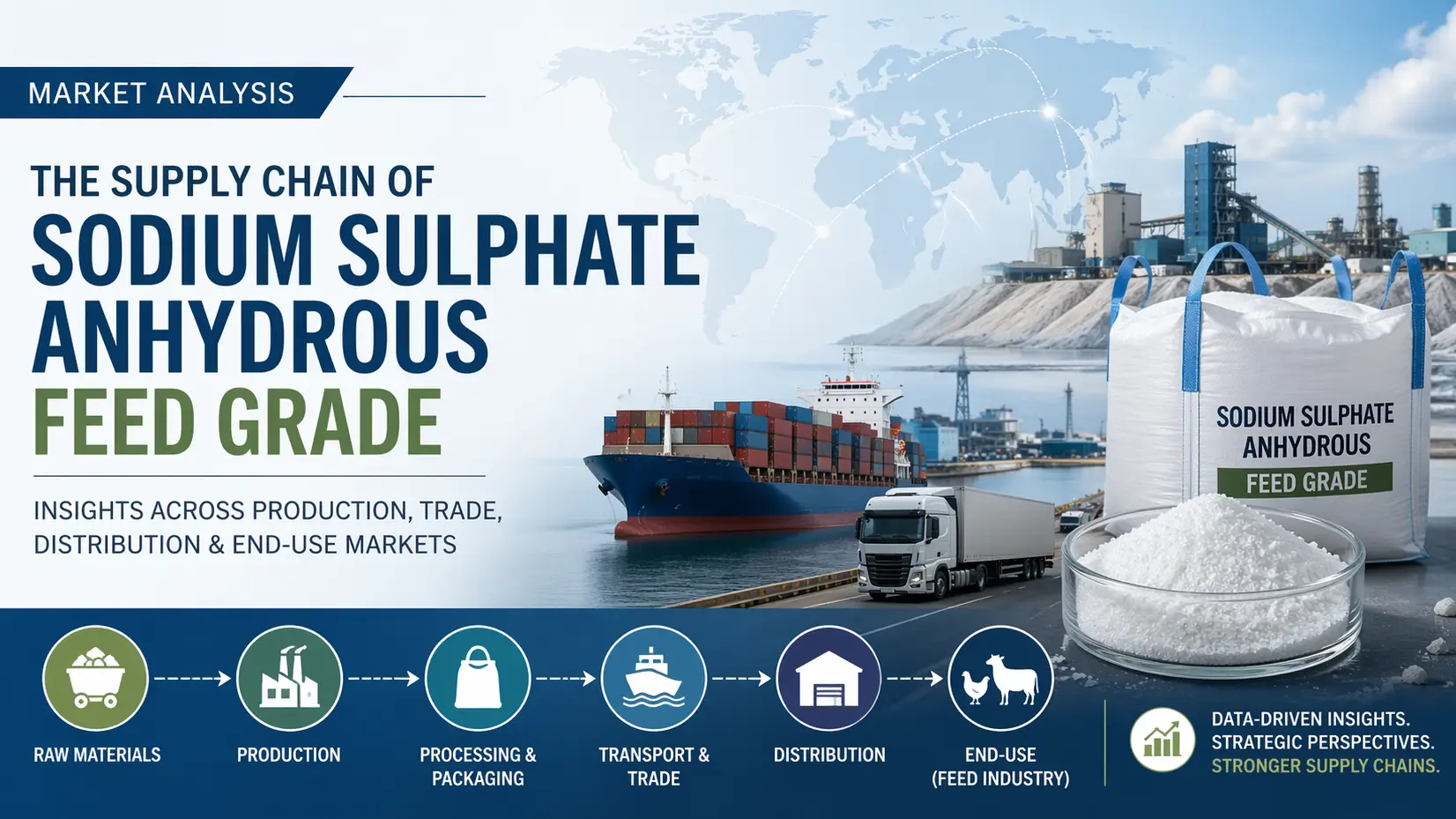
Sodium sulphate anhydrous feed grade continues to serve as a critical platform chemical within detergent, pulp processing, and animal nutrition ecosystems. As of 2026, the global supply chain is undergoing structural recalibration driven by energy costs, regional production clustering, and shifting downstream demand. The market is estimated to grow at a steady CAGR of 4.2%, supported by stable industrial consumption and expanding feed additive applications. With global production volumes reaching approximately 6.5 million MT, including around 1.8 million MT attributed to feed grade specifications, supply chain efficiency has become a decisive competitive factor for producers and distributors alike.
Supply Structure and Raw Material Integration
The sodium sulphate anhydrous feed grade supply chain is primarily anchored in by-product recovery from chemical and glass manufacturing processes, alongside natural mirabilite extraction in select regions. China remains the dominant production hub, accounting for over 45% of global output. Integration with upstream sulphuric acid and sodium-based processes ensures cost optimization, although feedstock variability introduces periodic constraints in purity consistency and output stability.
Global Logistics and Trade Flow Dynamics
International trade flows are heavily concentrated between Asia-Pacific exporters and import-dependent regions such as Europe and Latin America. Bulk shipping via containerized dry cargo remains standard, though inland transportation bottlenecks continue to impact lead times. Port congestion and rising freight volatility have increased average delivery cycles by 7–12 days in 2026 compared to pre-pandemic baselines, reinforcing the importance of regional warehousing strategies.
Pricing Pressure and Market Volatility
Market pricing for sodium sulphate anhydrous feed grade has remained moderately stable, fluctuating between USD 120–180/MT depending on purity level and origin. However, energy-intensive processing and freight surcharges have introduced intermittent upward pressure. Producers with vertically integrated operations are better positioned to absorb cost shocks, while smaller exporters face margin compression amid competitive bidding environments.
End-Use Demand and Feed Industry Linkages
Demand from the feed industry is increasingly tied to mineral supplementation and formulation efficiency in livestock nutrition. The chemical’s role as a neutral filler and processing aid has supported consistent uptake across poultry and cattle feed segments. Emerging demand in emerging economies is further reinforcing export volumes, particularly from Southeast Asia and South America, where feed production is scaling rapidly.
Conclusion
As sodium sulphate anhydrous feed grade continues to solidify its role as a versatile platform chemical, supply chain resilience will define market leadership. Producers are increasingly prioritizing integrated logistics, regional diversification, and cost-efficient sourcing strategies to maintain competitiveness in a fragmented global environment.
Within this evolving landscape, Tradeasia International emerges as a reliable global solution provider, offering streamlined procurement, optimized distribution networks, and consistent supply assurance for industrial buyers navigating complex chemical trade flows.
Sources
-
https://www.usgs.gov/centers/national-minerals-information-center
-
https://www.icis.com
-
https://www.mordorintelligence.com
Leave a Comment