Introduction
The global paper industry, valued at over USD 350 billion, relies on high-performance materials to meet increasing demands for print quality, brightness, and sustainability. At the core of this production process lies kaolin clay, a versatile mineral essential for coating and filling paper grades. The performance of kaolin is not only determined by its mineral properties but is also shaped by the quality of packaging, storage, and supply chain logistics.
Ineffective handling at any stage can result in contamination, moisture absorption, particle agglomeration, and inconsistent slurry properties. These issues directly affect paper smoothness, ink receptivity, and opacity. For procurement managers and production engineers, mastering operational handling is as crucial as selecting the correct clay grade. This guide provides a comprehensive overview of packaging, storage, and bulk supply best practices, helping paper mills preserve material quality, maintain production continuity, and optimize total cost of ownership.
Kaolin Packaging Options for Paper Mills
Paper mills typically receive kaolin in two forms: dry powder or pre-dispersed slurry. Each form offers benefits and requires specific handling.
Dry Kaolin Packaging
Dry kaolin is commonly delivered in multi-wall paper bags of 25–50 kg, flexible intermediate bulk containers (FIBCs or big bags of 500–1,500 kg), or bulk shipments via rail or truck. Bags are suitable for smaller operations or trial batches, while big bags and bulk shipments reduce labor and packaging waste. Dry packaging protects the clay from contamination in short-term storage but requires dust control during unloading.
Kaolin Slurry
Kaolin slurry arrives as a pre-dispersed suspension with 40–70% solids in tankers or totes. This ready-to-use form eliminates on-site dispersion, saving time and energy, and is ideal for high-volume coating lines. However, slurry requires specialized tankers with agitation to prevent settling, and microbial growth control is essential to maintain quality during storage and transport.
For dry kaolin, sealed containers and covered conveyors prevent contamination from dust or dirt. Slurry tankers should be grounded to avoid static sparks. Transport safety protocols must comply with DOT or local regulations, and desiccants are recommended for dry shipments in humid regions.
Storage Guidelines for Kaolin
Proper storage protects kaolin’s particle size distribution, brightness, and rheology, which are critical for paper performance.
Dry Kaolin Storage
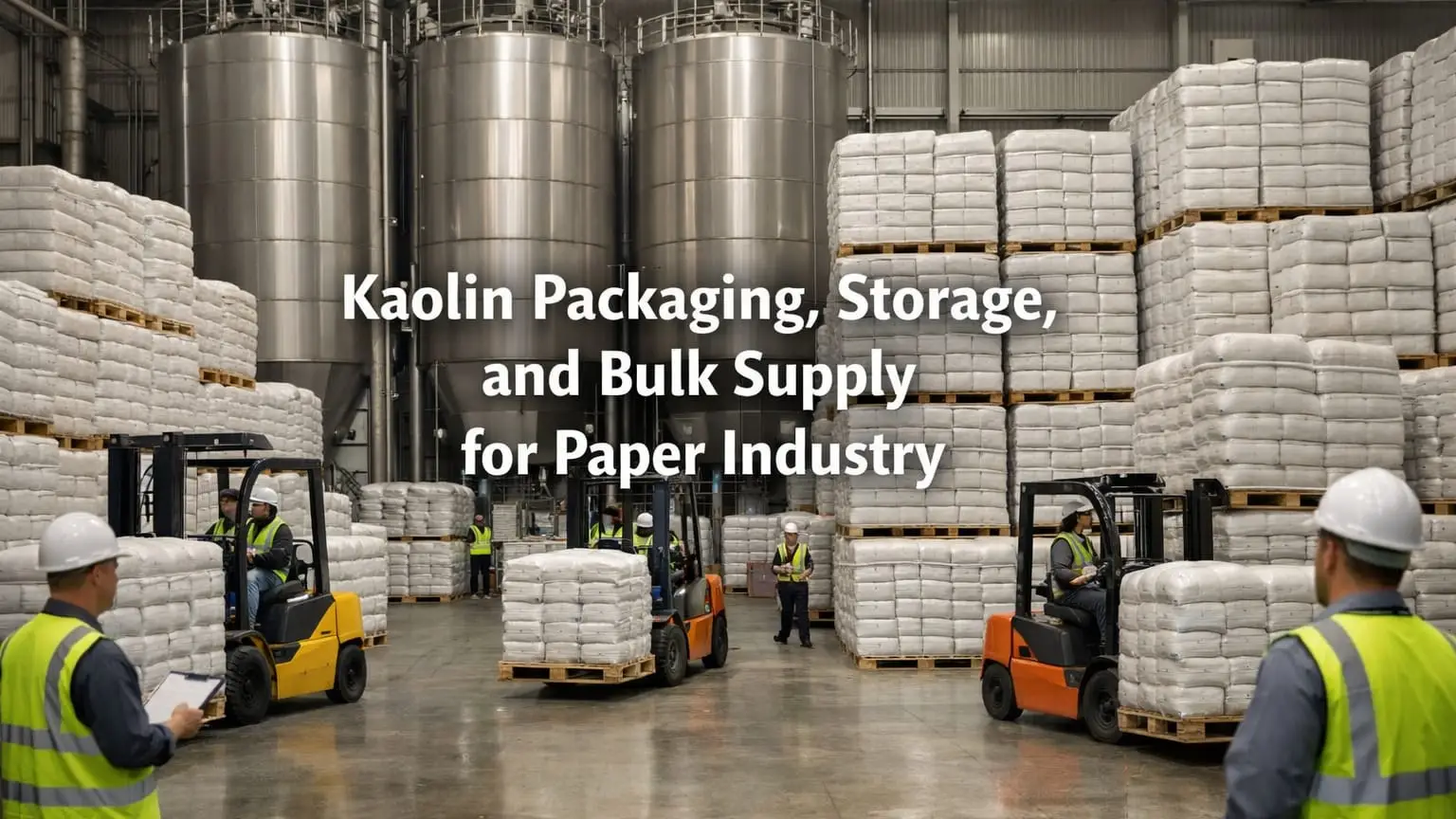
Dry kaolin should be stored at relative humidity below 60% and temperatures between 10–30°C to prevent caking. Silos made of stainless steel or epoxy-lined material are suitable for high-volume mills, allowing pneumatic transfer and FIFO (first-in, first-out) rotation. For bagged storage, warehouses should be covered, ventilated, and equipped with elevated pallets to avoid floor moisture. Desiccants can extend shelf life to 12–24 months.
Slurry Storage
Slurries require agitated tanks made of corrosion-resistant materials. Tank capacities should match daily consumption, typically between 50–200 m³. Residence times should be limited to 3–7 days. Biocides and pH adjustment (8–10) help prevent microbial growth and maintain viscosity. Inline refractometers monitor solids content, and dated inventory ensures proper rotation. Routine testing for viscosity, brightness, and particle size is essential to maintain consistent quality.
Proper storage prevents quality loss. Moisture-induced clumping in dry kaolin can increase defect rates by 15–20%, while slurry settling affects coating uniformity and paper smoothness.
Bulk Supply Considerations
Bulk kaolin supply offers cost savings of up to 20–30% per ton compared to bagged delivery by reducing labor and packaging costs. Bulk deliveries are made via rail hopper cars, bulk trucks, or ISO tanks, with minimum orders of 20–50 tons depending on mill requirements.
Transportation methods vary by region. Ocean freight in breakbulk or containers is common for international shipments, followed by road or rail delivery to inland mills. Weatherproof covers and vibration-dampened trailers protect material during transit. Regional logistics, like Indonesia’s archipelago, may favor slurry tankers for coastal mills to minimize transshipment risks.
Handling and Safety Practices
Kaolin handling must address dust, slip hazards, and exposure risks, particularly for dry powders with respirable fractions under 10 microns.
Dry Kaolin Safety
Local exhaust ventilation (LEV) captures airborne particles at transfer points. Pneumatic conveying systems operating at low pressure reduce dust, while wet suppression sprays prevent airborne dust during unpacking.
Slurry Safety
Progressive cavity pumps are used to handle slurry flow rates of 50–200 m³/h. Strainers prevent blockages and maintain uniform distribution.
Personal Protective Equipment (PPE)
Operators should wear FFP2 masks, safety goggles, gloves, and anti-static coveralls. OSHA exposure limits for respirable crystalline silica are 0.1 mg/m³. Staff should be trained on lockout-tagout procedures, spill response, and emergency measures. Dry powder spills are cleaned using HEPA-filtered sweeping, while slurries are contained with berms or wet vacuuming.
Partnering with a Reliable Supplier
Selecting the right supplier affects product quality, cost stability, and operational reliability. Key considerations include:
Technical Capability: Suppliers should offer a range of kaolin grades, provide detailed TDS and CoA documents, and assist with grade selection and troubleshooting. Consistent batch quality is critical to avoid disruptions in paper machine runnability.
Supply Chain Robustness: A strong supplier ensures secure sourcing, diversified production assets, and a resilient logistics network to mitigate risks. They should provide flexible packaging and advise on optimal storage solutions.
Value-Added Services: Just-in-time delivery programs, vendor-managed inventory (VMI), and digital order tracking platforms improve operational efficiency.
Reliable partners like Chemtradeasia help mills maintain consistent material quality while reducing the complexity of global logistics, allowing production teams to focus on manufacturing excellence.
Impact of Packaging and Storage on Paper Quality
Suboptimal kaolin packaging storage paper industry practices directly impair paper quality. Oversized particles from dry storage reduce coating gloss by 5–10%, while uneven slurry viscosity results in inconsistent smoothness and opacity. Proper storage preserves brightness, gloss, and sheet caliper, supporting high-speed papermaking above 1,000 meters per minute. Adhering to best practices reduces material loss to below 1% and ensures uniform filler distribution, ultimately maintaining premium paper characteristics and minimizing downtime.
Conclusion
Kaolin packaging, storage, and bulk supply are critical to paper manufacturing performance. By implementing proper storage protocols, optimizing bulk supply strategies, and partnering with reliable global suppliers, mills can preserve kaolin quality from delivery to production. These practices reduce contamination risks, extend shelf life, improve brightness and smoothness, and minimize operational downtime.
In a competitive paper market, disciplined management of kaolin supply transforms a routine procurement activity into a source of operational advantage, ensuring a consistent, high-quality product while supporting efficiency, sustainability, and profitability.
Leave a Comment