Introduction
Blood meal, a high-protein byproduct derived from livestock rendering, continues to strengthen its position as a niche yet strategically important platform chemical within the global feed and fertilizer ecosystem in 2026. With rising demand for sustainable protein alternatives and circular agriculture inputs, the market is estimated to expand at a CAGR of 6.2%, supported by tightening feed ingredient supply chains. Average global pricing ranges between USD 800–1,200/MT, reflecting protein concentration and regional processing costs. As livestock production scales, global output is projected at nearly 1.4 million MT annually, reinforcing its industrial relevance.
Applications in Animal Feed and Aquaculture
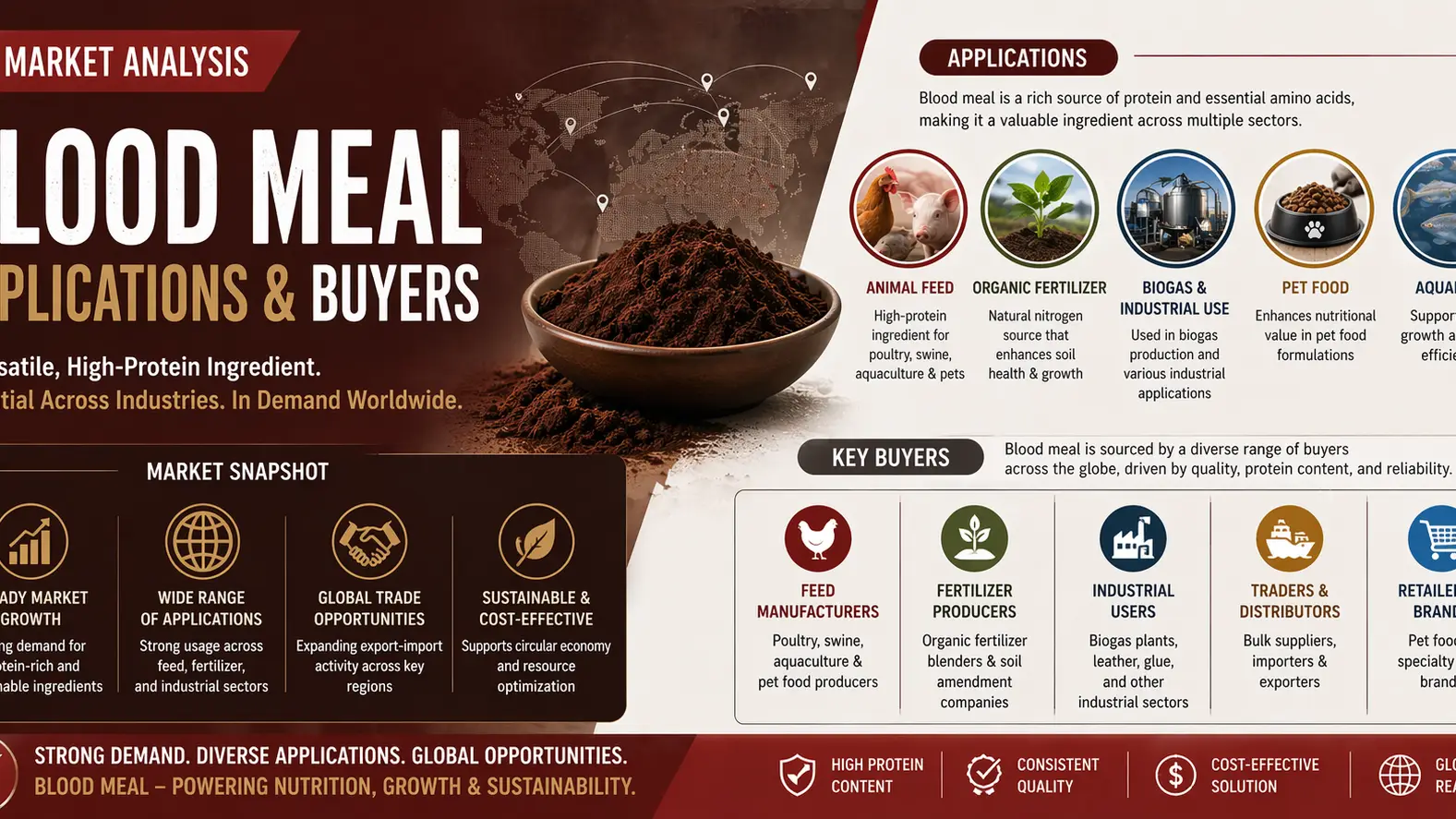
Blood meal remains a high-value protein source primarily utilized in poultry, swine, and aquaculture feed formulations due to its crude protein content exceeding 85%. In aquaculture, it is increasingly used as a partial fish meal substitute, helping reduce dependency on marine resources. The feed segment alone accounts for over 65% of global consumption in 2026, driven by intensifying protein demand in Asia-Pacific livestock systems. Its digestibility and amino acid profile make it a cost-efficient ingredient in compounded feed, especially as feed manufacturers seek alternatives amid volatile soybean meal prices.
Key Buyer Landscape and Procurement Dynamics
The primary buyers of blood meal include commercial feed mills, integrated poultry producers, and aquaculture corporations. Fertilizer manufacturers also represent a growing segment, leveraging blood meal’s nitrogen-rich composition for organic soil enhancers. Large-scale procurement is increasingly centralized, with buyers locking in long-term contracts to mitigate price fluctuations within the USD 800–1,200/MT range. Procurement strategies are shifting toward traceability and quality certification, as end-users demand consistent protein content and pathogen-free processing standards.
Supply Chain Structure and Production Economics
The blood meal supply chain is tightly linked to slaughterhouse rendering operations, making availability dependent on livestock processing volumes. Global production of approximately 1.4 million MT is concentrated in regions with strong meat industries such as North America, Europe, and parts of Asia. Rendering efficiency, logistics costs, and regulatory compliance significantly influence landed pricing. Cold chain handling and drying technologies are also improving yield consistency, supporting the market’s steady 6.2% CAGR trajectory.
Regional Demand Patterns and Trade Flow Shifts
Asia-Pacific dominates consumption, driven by expanding aquaculture in China, Vietnam, and India, while Europe maintains strong demand in organic farming applications. North America remains both a major producer and exporter. Trade flows are increasingly influenced by sustainability regulations and feed safety standards, pushing exporters to upgrade processing capabilities. Emerging markets in the Middle East are also increasing imports as livestock diversification accelerates.
Conclusion
As blood meal continues to evolve from a traditional byproduct into a strategic protein input, its role in global feed and fertilizer systems is becoming more pronounced. Market participants are increasingly prioritizing reliable sourcing, consistent quality, and cost stability across volatile agricultural cycles. In this context, Tradeasia International stands out as a global solution provider, offering integrated sourcing and supply chain support for industrial buyers seeking consistent access to feed-grade and fertilizer-grade raw materials.
Sources
-
https://www.fao.org
-
https://www.oecd.org/agriculture/oecd-fao-agricultural-outlook/
-
https://www.fas.usda.gov
Leave a Comment