Explore our network of country and industry based websites to access localized information, product offerings, and business services across our group.
Log in to start sending quotation requests for any product.
Don't have an account? Sign Up Here
Log in now to access technical product documents from our product range.
Don't have an account? Sign Up Here
Home All Products Monochloroacetic Acid - India
|
IUPAC Name |
: 2-chloroacetic acid |
|
Cas Number |
: 79-11-8 |
|
HS Code |
: 2924.12.10 |
|
Formula |
: C2H3ClO2 |
|
Appearance Name |
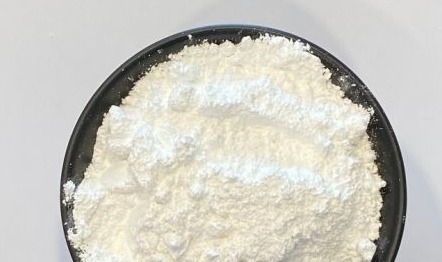
: Colorless to light-brown crystalline material |
|
Common Names |
: Chloroacetic acid, Chloroethanoic acid, Monochloro |
|
Packaging |
: 25/50 kg Net HDPE Bags with Liner inside. 500/1050 kg PP FIBC Jumbo Bag |
For more detailed information including pricing, customization, and shipping:
Brief Overview
Monochloroacetic acid (MCA) is a colorless crystalline material, which is highly soluble in water and soluble in organic solvents. Its vapor pressure at room temperature is moderate with reported values between 0.2 hectopascals (hPa) (crystalline substance) and 10 hPa (solution in water). MCA has a pungent odor. It is one of the most important halogenated derivatives of acetic acid. MCA is a reactive compound that can undergo various reactions to form a number of intermediates.
Manufacturing Process
The process for preparing monochloroacetic acid (MCA) comprising a chlorination step and a hydrogenation step. Its process comprises the removal of aldehydes from a process stream by oxidation using a peroxycarboxylic acid. A preferred peroxycarboxylic acid comprises peracetic acid. Preferably, the process is carried out at a temperature of 60–100° C., most preferably at atmospheric pressure. Preferably, an about equimolar amount of peroxycarboxylic acid is used relative to the molar amount of aldehydes present in the process stream. A practical choice for the process stream is the acetic acid recycle stream. The invention process provides a clear and colourless MCA end product.
Intermediate of carboxymethylcellulose and -starch can be used as thickening agent for detergents, oil drilling, paper, food and pharma applications, Production of agrochemicals like herbicides (e.g. 2,4-D and MCPA) or insecticides e.g. (dimethoates), Raw material for betaine production (personal care), Manufacturing of thioglycolic acid for UV-light stabilizers in PVC and thioglycolic acid ester as additives in cosmetics, Further applications: vitamins, synthetic caffeine, malonates, glycine.



 English

 Indonesian
 简体字
简体字
 العربية
 Español
 Français
 Português
 日本語
日本語
 한국어
한국어
 Tiếng Việt




















---china.webp)