Explore our network of country and industry based websites to access localized information, product offerings, and business services across our group.
Log in to start sending quotation requests for any product.
Don't have an account? Sign Up Here
Log in now to access technical product documents from our product range.
Don't have an account? Sign Up Here
Home All Products Activated Carbon (Granular) - India
|
IUPAC Name |
: Activated Carbon |
|
Cas Number |
: 7440-44-0 |
|
HS Code |
: 3802.10.00 |
|
Formula |
: C |
|
Appearance Name |
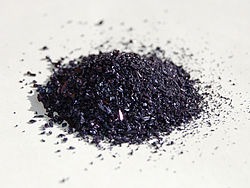
: Black Granule |
|
Common Names |
: Activated coal, activated charcoal |
|
Packaging |
: 25 Kg Bag |
For more detailed information including pricing, customization, and shipping:
Brief Overview
Activated carbon, also known as activated charcoal or activated coal, is a form of carbon distinguished by its tiny pores that significantly increase its surface area. This expanded surface area is crucial for adsorption, a process where particles like atoms, ions, or molecules in gas, liquid, or solid form are attracted and held onto the surface. Activated carbon's ability to trap these particles within its internal pore structure through electrostatic attraction or chemisorption makes it valuable across industries. It plays a vital role in removing harmful substances in chemical processes, accelerating chemical reactions, and acting as a carrier for biomass and chemicals.
Manufacturing Process
Activated carbon typically originates from coconut shell charcoal or coal. To produce activated carbon, the material undergoes a controlled burning procedure in a sealed environment, specifically designed for the pyrolysis process.
This transformation primarily aims to open the pores of the carbon charcoal. Initially, the charcoal possesses an area of 2 m2/g, but through this process, it expands to a range of 300-2000 m2/g, becoming activated charcoal. Activation occurs through two methods: a mild oxidation reaction using water vapor at temperatures ranging between 900-1000°C or dehydration facilitated by chemicals or salts.
Water Treatment Industry
Currently, activated carbon is widely used in water treatment, including the restoration of groundwater and the treatment of service water. It's commonly used in either powder or granular forms, chosen according to specific application needs and process intricacies.



 English

 Indonesian
 简体字
简体字
 العربية
 Español
 Français
 Português
 日本語
日本語
 한국어
한국어
 Tiếng Việt



















---india.webp)